
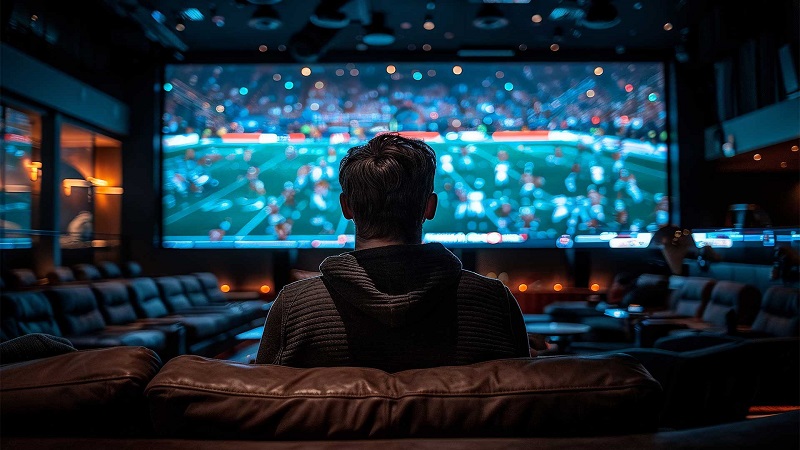
A sports-watching room should feel ready for kickoff without becoming a space that works only during games. The best setup balances sightlines, comfort, storage, and movement. With deliberate choices, it can support a match, meal, conversation, or quiet evening after the screen goes dark.
Begin with the room’s everyday job
Before choosing a larger television or buying team-themed furniture, list the activities the room already needs to handle. Will people eat there, read, work, or move through it to another part of the home? How many viewers usually gather? Do windows create glare? Are outlets close to the likely screen position? The answers should shape the layout before decoration enters the conversation.
DesignMode24’s interior-design approach puts the purpose of a space ahead of a single style. That is a practical starting point for a viewing room. A layout that works for two people may feel cramped with six, while a large sectional may look impressive but block a doorway or make conversation difficult when there is no game on.
Measure the room, including door swings and walking routes. Mark the proposed screen and seating with painter’s tape before moving heavy furniture. This test reveals whether the angle is comfortable and routes remain clear.
Build one clear viewing zone
Place the screen where daylight can be controlled and the main seats do not require a twisted neck. Curtains or blinds can soften glare, while a lamp beside or behind the seating area can keep the room comfortable during an evening broadcast. Avoid placing a bright light directly opposite the screen, and leave ventilation around electronics rather than enclosing equipment tightly.
Seating does not have to form a rigid row. A sofa, one movable chair, and an ottoman can support a group while allowing the arrangement to change for conversation. Angle at least some seats toward one another so the room remains social during breaks. Keep a small table nearby for water and snacks, but do not turn every surface into a charging station.
Manage devices and visual noise
One primary display is usually enough for a shared room. If a second device is needed for scores or information, give it a defined location, such as a side table or a drawer that opens during the game. This prevents phones and tablets from spreading across every seat and makes it easier to restore the room afterward.
Cable management is part of the design, not an afterthought. Route wires away from walking paths, secure loose cords, and keep remotes together in a tray. Use closed storage for accessories that are not needed every day. The DesignMode24 home-improvement archive includes practical topics such as lighting, remodeling, and other upgrades that can improve how a room functions as well as how it looks.
Team colors can appear in artwork, cushions, or one throw rather than covering every wall. Neutral larger pieces make it easier to change the room’s mood for another season or activity. Texture from a rug, curtain, or upholstered chair can soften sound and add warmth without competing with the screen.
Make hosting easy
A viewing room works better when food has a place outside the main seating area. Use a console, sideboard, or folding table for snacks so guests are not reaching over electronics. Choose serving pieces that can be cleared quickly between periods. Keep drinks on stable surfaces and provide a visible wastebasket so cleanup does not depend on someone making repeated trips through the room.
If children share the space, keep the layout open and any fragile equipment secure. Sports conversation, a quiz, or a film can be the main activity without adding money to it. Adults who discuss gambling should keep interfaces and conversations away from minors.
Keep optional markets separate from the room
Some adults may follow sports betting where legal. Keep it separate from room design: use a pre-set entertainment amount that cannot affect rent, bills, food, debt, or savings, never borrow or chase losses, and check local rules. If gambling becomes difficult to pause, step away and consult help for gambling problems or a local service.
Design for the screen-off moment
The best test comes after the final whistle. Can the room become a place to read, talk, eat, or rest without a major rearrangement? Use furniture with more than one purpose, keep the center open, and store remotes and accessories out of sight when they are not needed. DesignMode24 emphasizes the relationship between appearance and function, and that balance is especially valuable in a room built around entertainment.
A well-designed sports room does not promise a better result or make a market predictable. Good design reduces friction without dictating behavior. It gives people a comfortable place to share a game while preserving the home’s everyday character. When the screen goes dark, the room should still feel considered, calm, and ready for whatever comes next.