
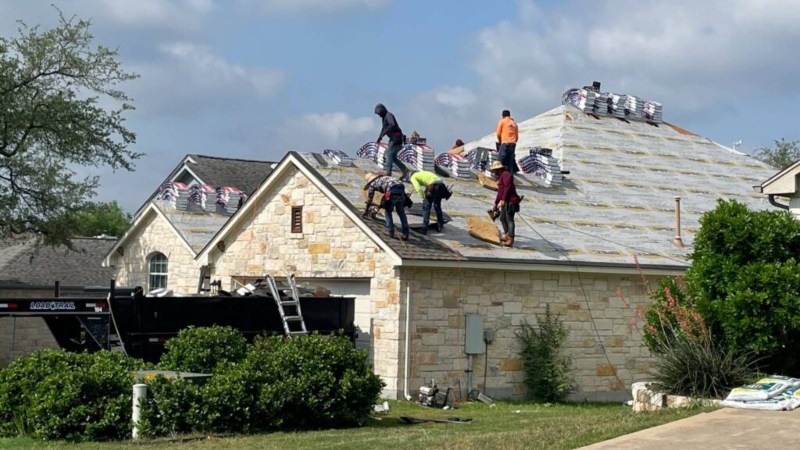
Austin homeowners often do not think about their roofs until they notice a ceiling stain, find a shingle in the yard, or hear water dripping during a thunderstorm. Unfortunately, by the time those warning signs appear, the underlying problem may have been developing for months—or even years.
Roofs in Central Texas face an unusually demanding combination of intense sunlight, prolonged heat, high winds, hailstorms, and sudden temperature changes. Even a roof that looks fine from the driveway can have damaged shingles, deteriorated flashing, poor ventilation, or moisture trapped beneath the surface.
Understanding the problems that commonly go unnoticed can help homeowners determine whether they need a small roof repair or a complete roof replacement before interior damage makes the project significantly more expensive.
1. Granule Loss That Looks Like Normal Aging
Asphalt shingles are covered with protective granules that help shield the roof from ultraviolet radiation. Some granule loss is normal, especially when a roof is new, but excessive loss may expose the asphalt layer beneath it.
Homeowners may notice dark or uneven areas on the roof, granules collecting near downspouts, or shingles that appear smoother than the surrounding sections. These changes are easy to overlook from the ground.
Austin’s heat can accelerate deterioration once the protective surface begins wearing away. Shingles may become brittle, crack, curl, or lose their ability to resist water.
A roofing contractor can inspect the affected areas and determine whether isolated shingle roof replacement is practical or whether the wear is widespread enough to justify replacing the entire system.
2. Small Roof Leaks That Have Not Reached the Ceiling
A ceiling stain is rarely the beginning of a roof leak. It is usually the point at which water has already traveled through several layers of the roofing system.
Water can enter around a vent, chimney, valley, skylight, wall intersection, or piece of deteriorated flashing. It may then follow roof decking, rafters, pipes, or insulation before becoming visible inside the home. The location of the interior stain may therefore be several feet away from the actual entry point.
Minor roof leak repair completed early may involve replacing damaged flashing, sealing a penetration, or repairing a limited section of shingles. When a leak is ignored, however, it can damage insulation, drywall, framing, and roof decking.
Homeowners searching for roof repair in Austin should look for a contractor who will identify the source of the leak rather than simply apply sealant to the most obvious exterior area. Driftwood Builders Roofing’s Austin repair services include shingle and tile repairs, chimney and porch leaks, missing shingles, flashing, ventilation components, and storm damage.
3. Hail Damage Without Missing Shingles
Many homeowners assume roof hail damage will leave holes in the roof or scatter shingles across the yard. In reality, roofing hail damage can be much less dramatic.
Hail may fracture the reinforcement inside an asphalt shingle, loosen protective granules, or create impact marks that are difficult to identify without safely accessing the roof. The shingles may remain in place while their expected service life is reduced.
The damage can be especially difficult to recognize when the storm does not cause an immediate leak. Months later, repeated heat and rain may cause the affected areas to deteriorate.
After a significant Austin storm, homeowners can look for collateral evidence such as:
- Dents in gutters or downspouts
- Damaged window screens
- Marks on metal roof vents
- Dents in garage doors
- Damage to fences, outdoor furniture, or air-conditioning units
These signs do not automatically mean the roof must be replaced, but they may justify a professional storm-damage inspection.
4. Deteriorated Flashing Around Roof Penetrations
Flashing directs water away from vulnerable areas such as chimneys, walls, vents, skylights, and plumbing pipes. Because flashing occupies a relatively small portion of the roof, homeowners rarely consider it when evaluating the condition of the system.
Loose, corroded, improperly installed, or heavily sealed flashing is a common source of leaks. Roof cement and caulk may temporarily slow water intrusion, but they are not always permanent substitutes for correctly installed flashing.
A qualified roof repair company should inspect how water moves around the problem area and determine whether the flashing needs to be resealed, rebuilt, or replaced.
Homeowners should be cautious when the only proposed solution is to spread another layer of sealant over a repair that has already failed. Repeated patches can conceal the underlying defect without correcting it.
5. Poor Drainage in Roof Valleys
A roof valley is the internal angle where two roof slopes meet. Valleys handle a concentrated volume of water during heavy rainfall, making proper installation and drainage especially important.
Leaves, branches, deteriorated shingles, exposed fasteners, or an incorrectly constructed valley can prevent water from flowing off the roof efficiently. Water may move sideways beneath the shingles or remain in the area long enough to penetrate the roofing system.
Valley repairs often cost more than basic roof repairs because the contractor may need to:
- Remove shingles from both sides of the valley
- Inspect and replace damaged decking
- Install new underlayment or water protection
- Rebuild the valley
- Install and blend new shingles into the existing roof
This is why roof repair quotes for valley work can differ substantially. A lower estimate may only include a surface-level patch, while a more comprehensive roof repair estimate may include rebuilding the defective area to provide a longer-lasting solution.
6. Poor Attic Ventilation
Roof problems do not always begin outside the house. Inadequate attic ventilation can trap heat and moisture beneath the roof decking.
During an Austin summer, a poorly ventilated attic can become extremely hot. The accumulated heat may contribute to premature shingle deterioration, increase cooling demands, and make upstairs living spaces less comfortable.
Moisture is another concern. Bathroom fans, household air leakage, and changes in outdoor conditions can introduce moisture into the attic. Without balanced intake and exhaust ventilation, condensation may form on decking, fasteners, or framing.
Ventilation problems can sometimes be corrected without replacing the entire roof. However, when homeowners replace a roof, the roofing contractor should evaluate the existing ventilation system rather than automatically reinstalling the same number and type of vents.
7. Rotten or Deteriorated Roof Decking
Roof decking is the wood surface beneath the underlayment and shingles. Because it is hidden, its condition often cannot be fully evaluated until the roofing materials are removed.
Decking may deteriorate because of:
- Long-term leaks
- Inadequate ventilation
- Repeated condensation
- Improperly installed flashing
- Previous roof installation problems
- Water entering through exposed fasteners or failed penetrations
Soft or rotten decking cannot reliably hold roofing fasteners and should be replaced before new roofing materials are installed.
This is one reason the final roof replacement cost can change after a project begins. A responsible roof replacement estimate should explain how deteriorated decking will be documented and priced if it is discovered during tear-off.
Homeowners comparing roofing contractors should ask whether the company removes the old underlayment so the decking can actually be inspected. Driftwood Builders Roofing states that it removes the existing felt during reroofing because leaving it in place can prevent contractors from seeing hidden decking problems.
8. Pipe Boots That Look Fine From the Ground
Plumbing vent pipes extend through the roof and are normally sealed with pipe boots or flashing assemblies. Over time, rubber components can crack, split, pull away from the pipe, or deteriorate in Austin’s heat.
A failing pipe boot may allow a small amount of water into the attic each time it rains. Because the leak is limited, it may not produce a visible ceiling stain right away.
Instead, moisture may slowly affect the surrounding decking and insulation.
Replacing a worn pipe boot is generally much less expensive than repairing the damage caused by years of unnoticed water intrusion. This is one reason periodic roof inspections can be worthwhile, particularly on an older roof.
9. Repairs That Were Never Properly Completed
Some roof problems are the result of earlier repairs that treated the symptom without correcting the cause.
Examples include:
- Caulk applied over damaged flashing
- New shingles installed over rotten decking
- Exposed nails covered with roof cement
- Improperly matched replacement shingles
- Debris left inside valleys
- Flashing reused when it should have been replaced
- Leaks repaired from inside the attic without correcting the exterior opening
A previous repair may look acceptable for a while and still fail during the next heavy storm.
When requesting roof repair quotes, homeowners should ask the contractor to explain what caused the problem, what materials must be removed, and how the repaired area will be integrated into the surrounding roofing system.
10. Aging Shingles That Have Not Started Leaking Yet
A roof does not have to be actively leaking to be nearing the end of its useful life.
Older shingles may become brittle, lose granules, crack around fasteners, or stop sealing properly. The roof may continue keeping water out under ordinary conditions but become much more vulnerable during high winds or severe storms.
Signs of advanced wear can include:
- Curling or lifted shingle edges
- Widespread granule loss
- Exposed fiberglass
- Cracked shingles
- Uneven discoloration
- Frequent minor repairs
- Shingles that break easily when handled
Replacing an aging roof before widespread leaking occurs can help homeowners plan the project instead of needing emergency roof repair during a major storm.
Roof Repair or Replacement: How Do You Decide?
Not every roofing problem requires a new roof. Roof repair may be the better choice when:
- The roof is relatively young.
- Damage is limited to one area.
- The surrounding shingles remain flexible and serviceable.
- The leak has a clear, repairable cause.
- The decking is structurally sound.
- Previous repairs have not repeatedly failed.
Roof replacement may be more practical when damage is widespread, the shingles are near the end of their service life, several areas are leaking, or continued repairs are becoming increasingly frequent.
The decision should also account for the relationship between roof repair cost and the remaining life of the roof. Spending thousands of dollars repairing a severely deteriorated system may not make sense when complete replacement will soon be necessary anyway.
An experienced Austin roofing contractor should be able to explain both options and provide documentation showing why a repair or replacement is being recommended. Driftwood Builders Roofing provides roof repair, roof replacement, storm-damage evaluation, and other roofing services throughout Austin and Central Texas.
Why Roof Replacement Quotes Can Differ by Thousands of Dollars
Homeowners estimating the cost for roof replacement may receive proposals that differ substantially. That does not automatically mean the highest estimate is overpriced or the lowest estimate is a bargain.
A detailed shingle roof replacement proposal should explain:
- Whether the existing roof will be completely removed
- Whether old felt or underlayment will be removed
- How damaged decking will be handled
- What type of underlayment will be installed
- How valleys and flashing will be rebuilt
- Whether drip edge is included
- What starter shingles and ridge-cap materials will be used
- Whether ventilation will be evaluated
- How cleanup and disposal will be handled
- What manufacturer and workmanship warranties are included
Roof size is only one part of the new roof cost. Pitch, height, accessibility, material type, roof complexity, and the number of chimneys, skylights, valleys, and penetrations can all affect pricing.
A roof replacement estimate should therefore be based on the actual design and condition of the house—not simply a generic cost per square foot.
What About Metal Roof Replacement?
Metal roofing requires a separate evaluation because the material, panel profile, thickness, coating, flashing details, and installation method can significantly affect the metal roof replacement cost.
A basic exposed-fastener metal system and a concealed-fastener standing-seam roof are not equivalent products. Homeowners comparing metal roofing quotes should verify:
- The metal gauge or thickness
- The panel profile
- Whether fasteners are exposed or concealed
- The coating and finish
- The underlayment system
- Flashing and trim details
- Ventilation requirements
- Manufacturer and contractor warranties
The lowest metal roof replacement cost may reflect a completely different system than a higher proposal.
How to Compare Roofing Companies Near You
When homeowners search for roofing companies near them, it can be tempting to focus only on price, reviews, or how quickly the contractor can begin.
A roof, however, functions as a complete system. Shingles, flashing, decking, underlayment, ventilation, and drainage must work together.
Before hiring a roofer, homeowners should ask:
- Are you insured?
- How long have you served the Austin area?
- Will the existing roof and underlayment be completely removed?
- How will you document damaged decking?
- What materials are included in the proposal?
- Who will supervise the project?
- What manufacturer and workmanship warranties apply?
- How are unexpected costs approved?
- Will you provide project photographs?
- Who should I contact if there is a problem after installation?
The best roofing company for a homeowner is not necessarily the company with the lowest price or the most aggressive sales presentation. It is the contractor that provides an accurate diagnosis, a detailed scope of work, clear communication, and a solution designed to last.
Do Not Wait for a Small Problem to Become Interior Damage
Minor roofing problems rarely improve on their own. A small flashing defect, cracked pipe boot, damaged valley, or lifted shingle can allow water to reach decking, insulation, drywall, framing, and interior finishes.
The cost to fix a roof leak is usually much lower when the source is identified early.
Austin homeowners do not need to assume that every issue requires a complete replacement. They do, however, need an accurate assessment from a contractor who will inspect the whole roofing system and explain the available options.
Addressing a hidden problem today may prevent the need for emergency repairs, interior restoration, or premature roof replacement later.