
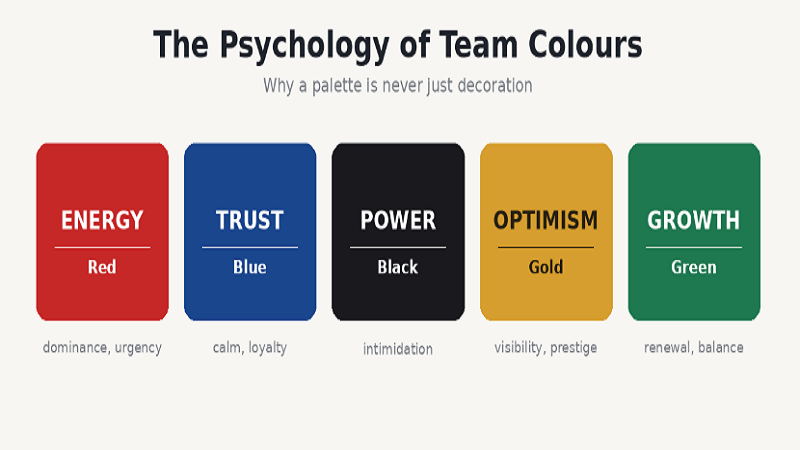
Team colours are far more than decoration, shaping identity, emotion, and the atmosphere of every match. Long before a season begins, clubs agonise over the exact shades that will appear on jerseys, crests, and stadiums. Understanding how sports teams choose their colors reveals a blend of psychology, heritage, and marketing that can subtly tilt how games are perceived and played.
The same colour logic reaches far beyond the pitch into the wider sports ecosystem of sponsors, broadcasters, and digital platforms. A modern sportsbook brand such as Parimatch builds instant recognition on a bold, consistent palette for the very same reason a club does, because a distinctive colour becomes a memory shortcut for millions of fans. Designers therefore treat colour as a strategic asset rather than an afterthought.
The Psychology of Colour on the Field
The psychology of colour explains why certain shades feel powerful while others feel calm. Red is widely linked with energy, dominance, and urgency, blue signals trust and composure, and black projects authority and intimidation. Teams lean on these associations to shape how opponents, officials, and supporters read them before a whistle even blows.
Does Red Really Win? What the Research Shows
The idea that red can influence results is not simply folklore. In a well-known 2005 Nature study, Hill and Barton found that competitors wearing red won roughly 55 percent of evenly matched combat bouts at the 2004 Olympics, with the edge widening in the closest contests. Later reviews across more Games proved mixed, so red likely offers a subtle psychological nudge rather than any guarantee of victory.
The Dark Power of Black Uniforms
Black uniforms carry a reputation that research has taken seriously. The 1988 study by Frank and Gilovich showed that observers rated black kits as more aggressive, and that black-clad teams in the NFL and NHL drew more penalties, a pattern a 2012 analysis of 25 NHL seasons echoed. The colour projects intimidation, yet it can also invite tougher officiating, a trade-off designers weigh carefully.
Colour Meanings at a Glance
These colour meanings help explain the palettes that dominate professional sport. The table below summarises the signal each shade sends and why teams reach for it.
| Colour | Signal it sends | Why teams choose it |
|---|---|---|
| Red | Energy and dominance | Projects aggression and confidence |
| Blue | Trust and calm | Builds loyalty and a steady identity |
| Black | Power and intimidation | Looks bold and sells strongly |
| Gold | Optimism and prestige | Stands out and suggests success |
| Green | Growth and balance | Ties to nature and local pride |
| White | Clarity and calm | Improves visibility, softens aggression |
How the most common team colours signal meaning and shape design choices.
Beyond Emotion: Identity and Recognition
Beyond emotion, practical identity drives many colour decisions. From american football to soccer, football teams pick shades that stand out on the football field, mark them apart from rivals, and echo local heritage. Leagues such as the Canadian Football League show how bold, contrasting kits sharpen recognition, and celebrated football legends often stay linked to the colours they wore.
Expert tip The strongest team colour is the one used consistently. A palette repeated across kit, crest, and every screen builds far more recognition than a striking shade that changes each season.
Team Colour FAQ
A few questions come up again whenever designers and fans discuss why team colours matter so much.
Q: Which colours are most common in team branding?
A: Red and blue dominate because they carry strong, opposite associations that are easy for fans to remember.
Q: Can a uniform colour actually change the result?
A: Evidence points to a small psychological edge at most, so colour supports performance rather than deciding it.
Q: Why do so many clubs add a black alternate kit?
A: Black looks powerful and sells well, though studies link it to more aggressive play and extra penalties.
The Winning Palette
Choosing team colours is a careful blend of psychology, identity, and consistency rather than simple taste. The right palette will not win a match on its own, yet it shapes how players feel, how rivals react, and how deeply fans connect. In that sense, the smartest colour choice quietly works in a team’s favour long before kickoff.