
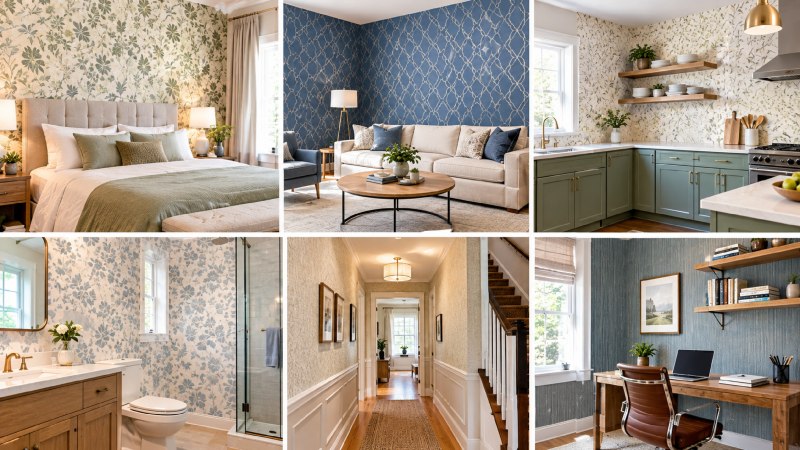
Selecting wallpaper demands careful attention to room function, light conditions, and long-term durability. Patterns, textures, and materials influence both visual balance and practical performance across different spaces in a home. A well-chosen design supports the intended use of each area while maintaining cohesion throughout the property. This guide examines the essential criteria for bedrooms, living rooms, and additional spaces, offering clear guidance grounded in material properties and spatial needs.
Material Selection and Performance Factors
Material selection forms the foundation of any successful wallpaper project. Vinyl options resist moisture and cleaning agents, making them suitable for higher-traffic or humidity-prone zones. Non-woven varieties offer easier installation and removal, as they remain dimensionally stable when wet. Paper-backed designs provide a traditional feel but require more careful handling during application. Fabric or natural fiber wallpapers introduce tactile depth yet demand greater protection from spills and sunlight. Matching the material to the room’s environmental conditions prevents premature wear and reduces maintenance demands over time. Detailed specifications on durability and climate suitability, often available through a wallpaper shop Singapore, assist in aligning products with local conditions and intended use.
Color and scale require equal consideration. Lighter tones reflect available light and can make smaller rooms feel more open. Darker shades absorb light and create a sense of enclosure, which works effectively in larger volumes or spaces intended for rest. Large-scale patterns suit expansive walls where the design can be fully appreciated from a distance. Smaller motifs maintain visual interest without overwhelming compact areas. Consistency in undertones across adjoining rooms helps establish a unified interior character without forcing identical schemes in every space.
Wallpaper Choices for Bedrooms
Bedrooms prioritize calm and personal comfort. Soft neutrals, muted blues, and gentle greens promote rest by reducing visual stimulation. Subtle textures, such as grasscloth or fine linen effects, add depth without introducing busy motifs that might disrupt sleep. When pattern is desired, low-contrast designs with organic or abstract forms perform better than high-contrast geometrics. The wall behind the bed often serves as a focal point, so a carefully scaled design in that location can define the space while remaining secondary to the overall room atmosphere.
Durability and Practical Needs in Sleeping Spaces
Durability still matters in bedrooms, though traffic is typically lower than in communal areas. Wipeable surfaces prove useful near bedside tables where accidental marks may occur. Blackout properties are not inherent to wallpaper, yet pairing a denser material with appropriate window treatments supports better light control. Ceiling applications remain uncommon in sleeping spaces, as they can create a heavier visual weight. Most installations focus on the four walls or a single feature wall to preserve a sense of openness.
Light Conditions and Color Response
Natural light levels influence choices significantly. North-facing rooms benefit from warmer undertones that counteract cooler daylight. South-facing bedrooms handle cooler palettes more readily because abundant sunlight prevents the space from feeling stark. Testing samples under both daytime and evening lighting conditions reveals how colors shift and ensures the final selection performs as intended throughout the day.
Wallpaper Choices for Living Rooms
Living rooms serve as primary gathering areas and therefore tolerate greater visual energy. Bold patterns, richer colors, and pronounced textures can define conversation zones or highlight architectural features. Vertical stripes or elongated motifs may emphasize ceiling height, while horizontal arrangements can make a room appear wider. Coordinating the wallpaper with existing furniture and flooring creates continuity. Contrasting it against a neutral sofa or rug allows the walls to become the dominant element.
Traffic Resistance and Feature Walls
High-traffic living spaces favor durable vinyl or coated non-woven products that withstand occasional contact and cleaning. Areas near doorways or seating experience more wear, so selecting a material rated for scrubbability protects the investment. Feature walls behind sofas or media units draw attention effectively when the pattern scale matches the viewing distance. Full-room coverage works when the design remains relatively restrained, preventing visual fatigue during extended periods of use.
Lighting Considerations in Shared Spaces
Lighting plays a decisive role. Artificial sources, whether overhead or task lighting, alter perceived color intensity. Warm bulbs intensify reds and yellows, while cooler LEDs can mute them. Evaluating samples under the room’s actual fixtures avoids surprises after installation. In open-plan arrangements that connect living areas to dining or kitchen zones, a gradual transition in pattern density or color intensity maintains flow without abrupt changes.
Wallpaper for Kitchens, Bathrooms, Hallways, and Other Areas
Kitchens
Kitchens demand moisture and stain resistance. Vinyl wallpapers with smooth or lightly textured surfaces clean easily and resist grease better than uncoated papers. Avoid delicate natural materials near cooking zones. Patterns that incorporate subtle geometric or botanical references can soften the functional character of the room without competing with cabinetry and appliances. Backsplashes traditionally use tile, yet wallpaper on remaining walls can unify the space when properly protected.
Bathrooms
Bathrooms present higher humidity challenges. Only materials specifically rated for wet environments should be considered, and even then, adequate ventilation remains essential. Smooth vinyl finishes perform most reliably. Smaller patterns or solid colors prevent the space from feeling crowded. Steam and condensation can compromise adhesive bonds over time, so professional installation with appropriate primers improves longevity.
Hallways and Stairwells
Hallways and stairwells experience consistent traffic and abrasion. Durable, scrubbable wallpapers with mid-scale patterns hide minor marks more effectively than large, open designs. Neutral or moderately saturated colors maintain a welcoming transition between rooms. In narrower corridors, lighter tones and vertical elements help counteract any sense of confinement. Staircases benefit from designs that read clearly from multiple angles and distances.
Home Offices and Secondary Rooms
Home offices and secondary spaces allow greater flexibility. Productive environments often favor quieter patterns that support concentration, while creative studios may accommodate stronger statements. Children’s rooms require robust, cleanable surfaces and designs that can evolve as preferences change. Many modern products offer peel-and-stick options that simplify updates.
Installation, Maintenance, and Longevity
Accurate measurement prevents waste and ensures sufficient material. Account for pattern matching, which increases the quantity required for repeating designs. Walls must be clean, dry, and smooth. Imperfections telegraph through thinner papers. Primers improve adhesion on porous or previously painted surfaces. Professional installation remains advisable for complex patterns or high-value materials, though many non-woven products suit experienced homeowners.
Maintenance varies by type. Most modern wallpapers accept gentle cleaning with a damp cloth. Avoid abrasive agents that damage surface coatings. Direct sunlight fades certain pigments over years, so ultraviolet-resistant options or strategic placement of furniture and window coverings extend color life. Removal methods differ. Strippable non-woven papers leave minimal residue, while traditional paste-the-wall or paste-the-paper types may require more effort.
Budget allocation should balance material cost with expected lifespan and installation complexity. Higher-quality products often justify their price through better performance and easier handling. Samples ordered in advance allow real-world evaluation of color, texture, and scale against existing furnishings and lighting.
Final Considerations
Trends in wallpaper design shift, yet fundamental principles of proportion, light response, and material suitability remain constant. Selecting designs that align with the permanent characteristics of each room produces lasting results rather than temporary visual effects. Coordination across spaces need not mean uniformity. Thoughtful variation creates interest while preserving overall harmony.
Homeowners who approach wallpaper selection systematically, beginning with room function and environmental demands, then refining color, pattern, and material, achieve interiors that support daily life effectively. Attention to these details yields surfaces that perform reliably and contribute meaningfully to the character of bedrooms, living rooms, and every other area of the home.