
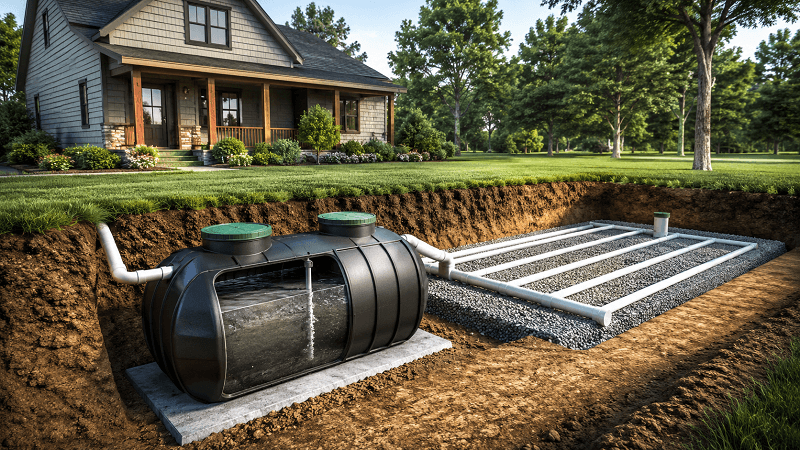
Your septic system does its job quietly, day after day, without asking for much attention. Most homeowners don’t think about it until something goes wrong, and by then, a simple maintenance call has sometimes turned into a much bigger conversation. One of the harder conversations to have is whether you’re looking at a repair or a full septic replacement. It’s not always an obvious call, and the answer depends on several factors that go beyond what’s visible from the surface of your yard.
This post walks you through the signs, the questions to ask, and the factors that help homeowners and property managers make a clear-headed decision about whether it’s time to replace rather than repair.
Why Septic Systems Don’t Last Forever
A conventional septic system has a lifespan. Under good conditions, with proper maintenance and normal household usage, most systems last anywhere from 20 to 40 years. Some last longer. Some fail sooner. The range is wide because longevity depends on things like soil conditions, system design, how heavily the system is used, whether it received regular pumping and inspections, and whether any repairs were addressed promptly or deferred for years.
Age alone isn’t a reason to replace a system. A well-maintained 35-year-old system can still function effectively. But age combined with recurring problems, visible failures, or outdated design can shift the math quickly in favor of replacement.
Signs Your System May Be Past Repair
There’s no single alarm that tells you definitively that replacement is the right move. It’s usually a combination of signals that, taken together, point toward the end of a system’s useful life.
Persistent wet spots or standing water over the drainfield
One of the most telling signs of a failing septic system is saturated ground over the drainfield, particularly when it hasn’t been raining. This happens when the drainfield can no longer absorb and treat effluent properly. Saturated soil can sometimes be a temporary condition caused by heavy rainfall or a system that needs pumping. But when the ground stays soggy in dry weather, the drainfield itself may have reached the point where it simply can’t recover. Drainfield failure is one of the most common reasons homeowners end up replacing a system rather than repairing it.
Sewage backing up repeatedly
A one-time backup can happen for a variety of reasons, including a clogged line, a full tank, or a damaged pipe. When backups happen repeatedly even after professional service, it suggests something more systemic is going on. The tank, the lines, or the drainfield may no longer be functioning as a unit.
The system is more than 25 to 30 years old and has a history of problems
This is where the repair-versus-replace conversation gets real. If your system is pushing 30 years, was never upgraded, has needed multiple repairs over the past several years, and is still showing symptoms, continued repair spending often makes less financial sense than investing in a new system. A licensed septic professional can help you assess whether you’re putting money into a system that has reached its ceiling.
Outdated or inadequate system design
Some systems were installed decades ago to meet codes that no longer reflect current standards. Systems originally designed for smaller households may be undersized for how the property is now used. Steel tanks, which were common in older installations, are prone to corrosion and structural failure over time. Concrete tanks can develop cracks. If an inspection reveals structural failure of the tank itself, replacement is typically the recommended path.
Tree root intrusion that has compromised the lines beyond repair
Root intrusion is a common culprit in older systems, particularly those with clay or concrete pipe. When roots have extensively damaged the lateral lines or infiltrated the distribution box, a camera inspection will make the extent of the damage clear. Spot repairs are sometimes possible, but when the damage is widespread, a full system replacement often becomes the more practical and durable solution.
The system fails a certified inspection
If you’re in the process of selling a home or refinancing, a PSMA-certified septic inspection is often required. If that inspection reveals system failure or identifies components that cannot be brought into compliance through repair, replacement is typically the outcome. It’s better to know this before closing than to have it surface as a legal or financial problem later.
Replacement Isn’t Always About Total Failure
One thing worth understanding is that replacement doesn’t always mean the system has completely stopped working. Sometimes it means the system is working, but barely, and the cost and risk of keeping it limping along no longer makes sense compared to starting fresh with a properly designed system.
There are also cases where a homeowner chooses proactive replacement because an aging system poses a risk to their well water, their property, or their neighbors’ properties. In rural areas where well water is the primary water source, the distance and relationship between a failing septic system and a private well is not something to gamble with. Contamination of groundwater is a serious concern and one of the more compelling reasons to act before a system fully fails rather than after.
Repair vs. Replace: Questions to Ask Your Septic Contractor
When you’re getting a professional assessment, here are some questions worth asking directly:
What specifically is failing, and can it be isolated? A single damaged component like a pump, a baffle, or a section of pipe is usually repairable. Widespread soil saturation, structural tank failure, or multiple simultaneous failures point more clearly toward replacement.
How much of the original system is still functional? If a repair would preserve 70% of a functioning system, that’s a different conversation than repairing 30% of a system that’s already in significant decline.
What will a repair cost, and what’s the realistic lifespan extension? If a repair costs a substantial amount and buys you only two or three more years before the underlying issues resurface, a replacement often provides better long-term value.
Is my current system the right size and design for how the property is used? This is especially relevant if the household has grown, if the property has been renovated, or if usage patterns have changed significantly since the system was originally installed.
Are there permit or code compliance issues? In some cases, repairs require bringing the system up to current code, which can significantly change the cost picture and sometimes make full replacement the cleaner path forward.
What the Replacement Process Actually Looks Like
For homeowners who have never been through it, the idea of replacing a septic system can feel overwhelming. Understanding the general process takes some of the uncertainty out of it.
First, a licensed professional will assess the property, including a soil evaluation and potentially a perc test, to determine what type of system is appropriate for your soil conditions and lot size. This evaluation guides what kind of replacement system will be designed.
From there, permits are pulled through the local municipality or township. Permit requirements vary by county and state, so working with a contractor who knows the local regulatory landscape matters.
Once permits are in place, the old system is properly decommissioned, which typically involves pumping and cleaning the existing tank, then filling or removing it according to local requirements. The new system is installed according to the approved design, inspected by the relevant authorities, and then placed into service.
The timeline from assessment to a functioning new system varies depending on permitting timelines, soil conditions, and the complexity of the installation. Your contractor should be able to give you a realistic project window once the site evaluation is complete.
A Note on Timing
If your system is showing signs of failure, sooner is almost always better than later. Waiting until a system completely fails often limits your options, creates more urgency, and can result in more extensive site disturbance or emergency costs. Scheduling a professional assessment when you first notice symptoms, even minor ones, gives you time to make a thoughtful, informed decision rather than a rushed one.
If you’re buying a property with an existing septic system, a certified inspection before closing is one of the smartest investments you can make. Knowing the condition of the system ahead of time puts you in a much better position to negotiate, plan, or walk away if the situation warrants it.
Final Thoughts
Replacing a septic system is a significant investment, but it’s also one that brings long-term peace of mind. A properly installed, correctly sized system that’s maintained on schedule should serve your household reliably for decades. The goal isn’t to spend money you don’t have to spend. It’s to make a clear-eyed decision based on the actual condition of your system, the cost of continued repairs, and what makes the most sense for your property and your wallet over the long run.
If you’re unsure where your system stands, the best starting point is a professional inspection from a licensed septic contractor. From there, you’ll have the information you need to make a confident decision, whether that’s a targeted repair, a planned replacement, or nothing at all.